Building core strength is one of the most transformative fitness investments you can make, yet many women feel intimidated by complicated routines or think they need a gym membership to get started.
The truth is that foundational ab work can happen right in your living room, with zero equipment and minimal time commitment.
Your core is the powerhouse of your body. Beyond just the visible six-pack muscles, your core includes deep stabilizers that support everything you do, from sitting at your desk to lifting your children to playing sports you love.
When your core is strong, you move better, feel more confident, and experience fewer aches and pains.
Many women are told they need to do hundreds of crunches or spend hours on ab exercises to see results. This outdated advice is not only inefficient but can actually lead to neck strain, lower back pain, and burnout.
The reality is that strategic, intentional core work three times per week using basic movements is far more effective than endless, mindless reps.
Whether you’re recovering from pregnancy and want to rebuild your postpartum core, dealing with persistent lower back pain that you hope strong abs can help ease, or simply looking to improve your posture and feel stronger in your daily life, this guide is for you.
You don’t need to wait until January or commit to a strict gym routine to start building the core strength that changes how you feel and move.
These 22 foundational ab exercises can be performed anywhere in your home, require absolutely no equipment, and can be adapted to your current fitness level.
This is a beginner’s guide, which means every exercise has modifications, clear instructions, and realistic expectations. You’re not training for a six-pack competition; you’re training for a stronger, healthier, more functional you.
Building core strength is a journey, not a destination. It’s about progress, not perfection. Whether you have 10 minutes or 30 minutes to dedicate to this work, you’ll find exercises here that fit into your life and help you achieve real, lasting results that go far beyond aesthetics.
Benefits of Core Strength for Women
A strong core does more than give you defined abs. It improves posture, reduces back pain, enhances balance, and supports everything from daily activities to athletic performance.
Core training is especially beneficial for women as it helps with pelvic floor health, supports better alignment during pregnancy and postpartum recovery, and boosts overall functional fitness.
How to Use This Guide
Start with 3 to 4 exercises from this list, performing them 3 times per week with at least one rest day between sessions. As your strength improves, gradually add more exercises and increase your reps.
Listen to your body and modify any movement that causes discomfort. Consistency matters more than intensity when building a sustainable fitness habit.
The 22 Best Ab Exercises for Beginners
1. Crunches
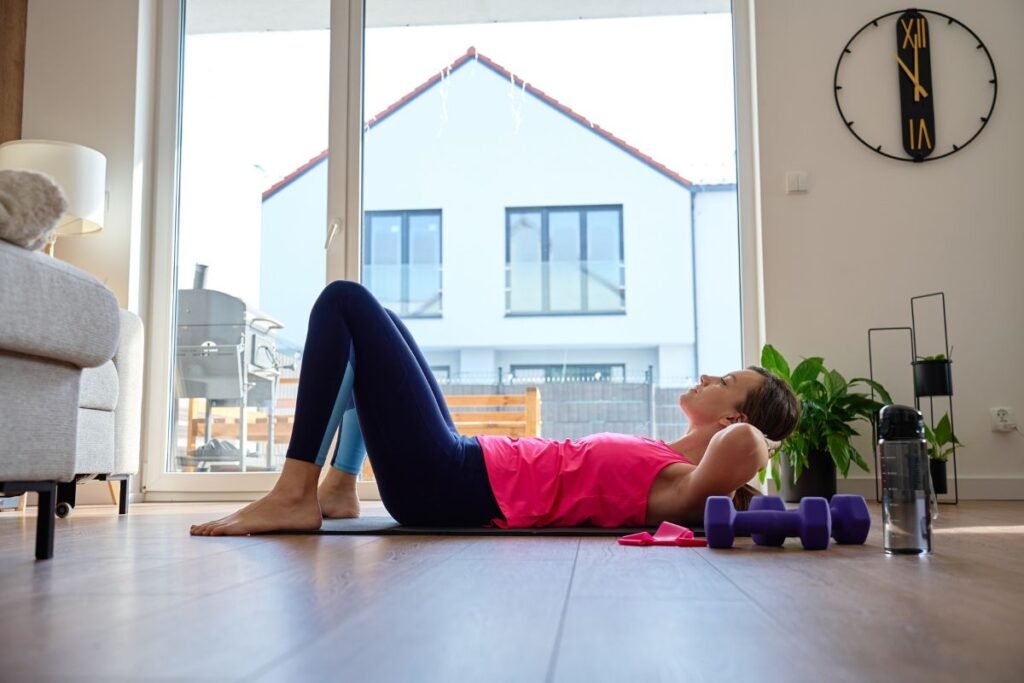
Crunches are a classic ab exercise that targets the rectus abdominis (six-pack muscle) with minimal equipment. Lie on your back with knees bent, feet flat, and hands behind your head, then lift your shoulders slightly off the ground.
Keep your neck neutral and avoid pulling on your head. Perform 10-15 reps for beginners.
2. Reverse Crunches
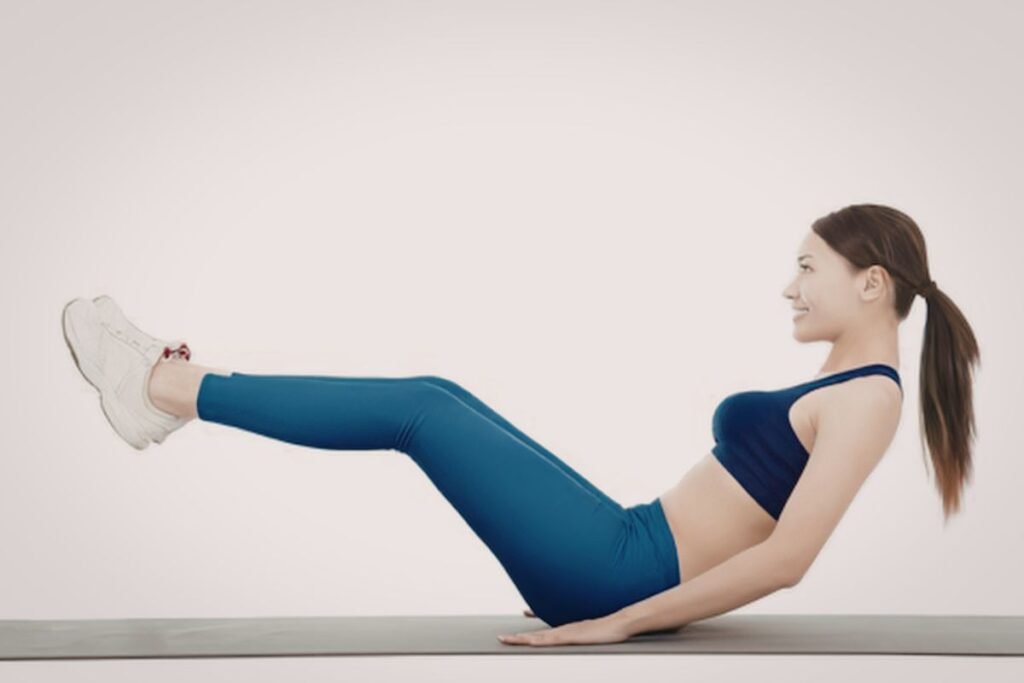
Reverse crunches shift the focus to your lower abs and are less taxing on your neck than traditional crunches. Lie on your back with legs bent at 90 degrees, then lift your hips toward your chest.
Control the movement on the way down to maximize engagement. Aim for 10-12 reps.
3. Dead Bug
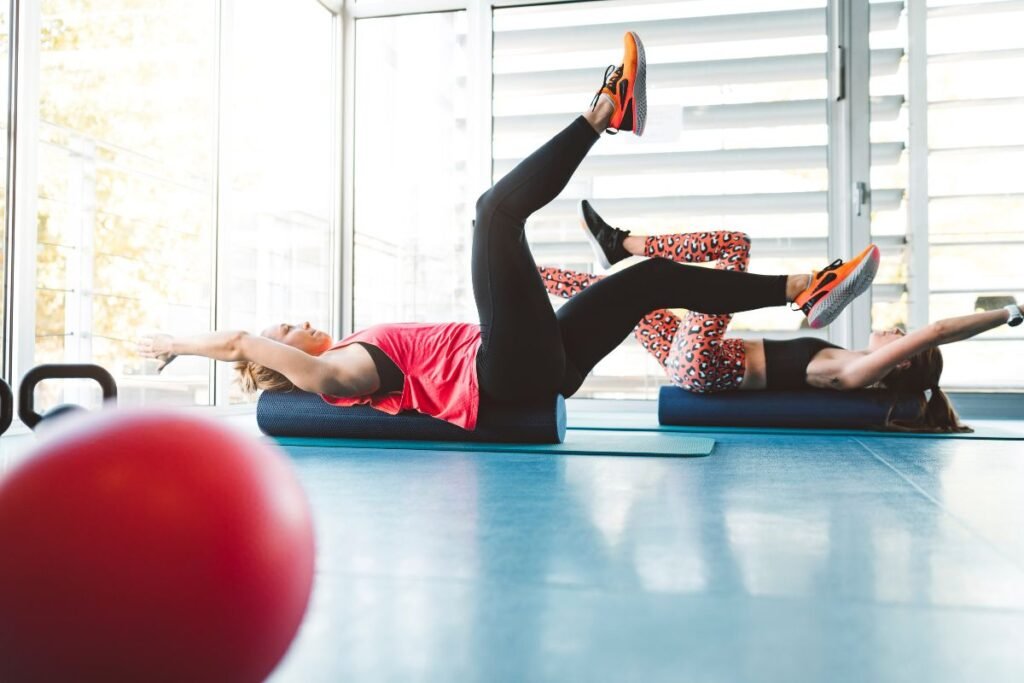
The dead bug is an excellent beginner exercise that strengthens your core while improving coordination. Start on your back with arms extended toward the ceiling and legs bent at 90 degrees, then slowly lower opposite arm and leg.
Return to starting position and alternate sides. This movement teaches proper core bracing. Do 8-10 reps per side.
4. Marching in Place (Lying Down)
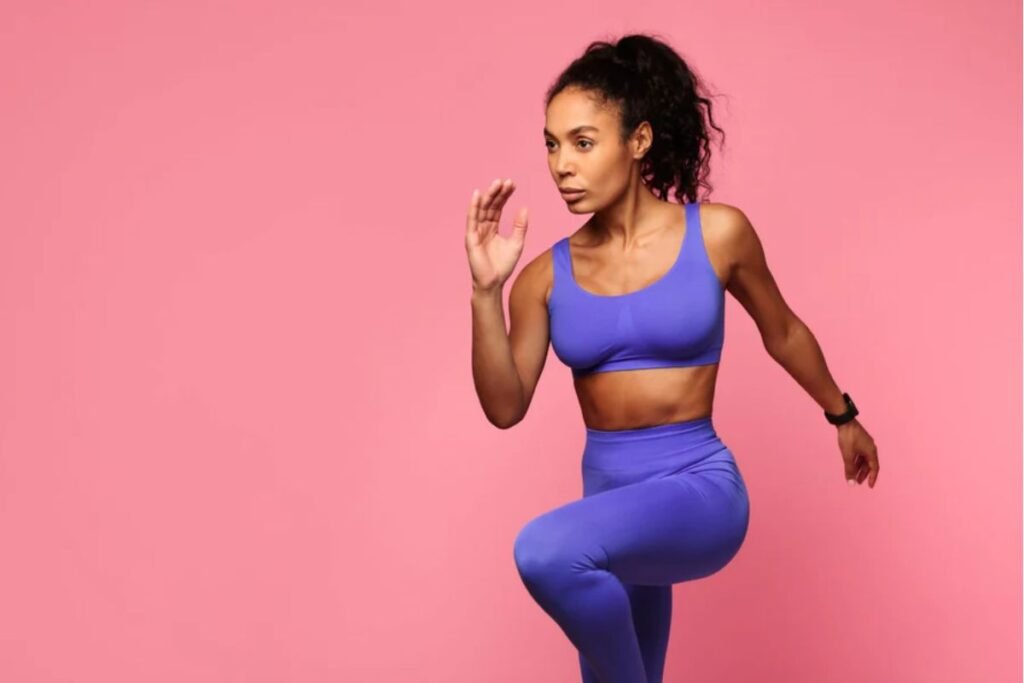
This gentle variation keeps constant tension on your core without impact. Lie on your back with legs bent, then slowly lift one foot slightly off the ground, alternating sides.
Keep your lower back pressed into the floor throughout. Perform 20-30 total reps (10-15 per leg).
5. Heel Touches
Heel touches are a beginner-friendly exercise that strengthens obliques (side abs) without straining your neck. Lie on your back with knees bent and feet flat, then crunch slightly and reach one hand toward the heel on that side.
Alternate sides in a controlled motion. Complete 12-16 reps total (6-8 per side).
6. Pelvic Tilts
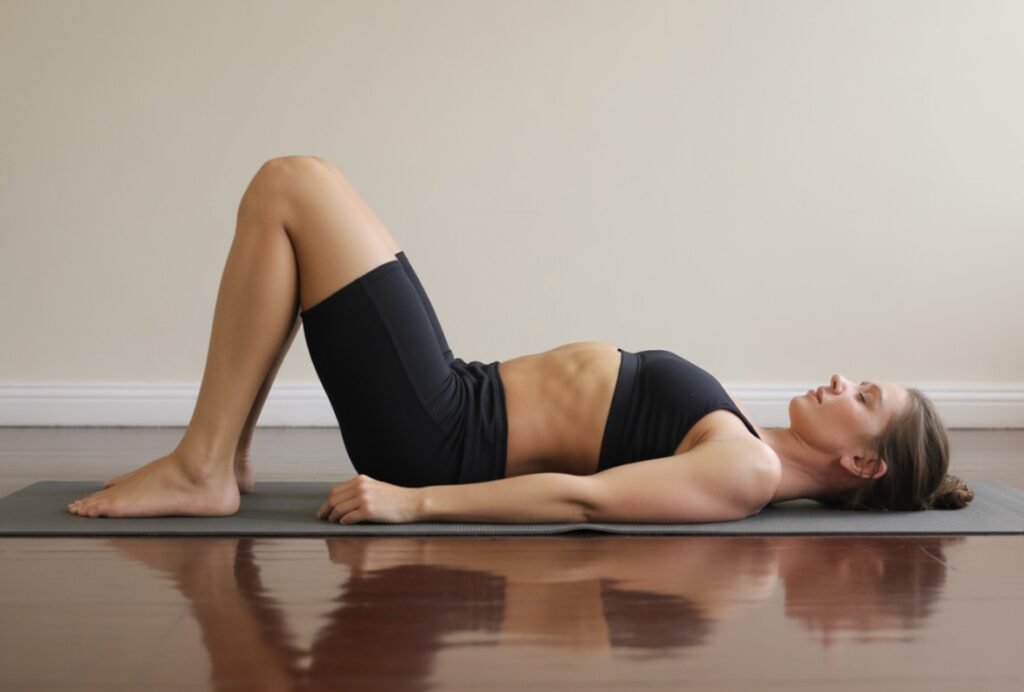
Pelvic tilts are foundational for core stability and are safe for postpartum recovery. Lie on your back with knees bent, feet flat, and gently tilt your pelvis so your lower back presses into the floor.
Release and repeat, focusing on the abdominal contraction rather than movement range. Do 12-15 reps.
7. Glute Bridges
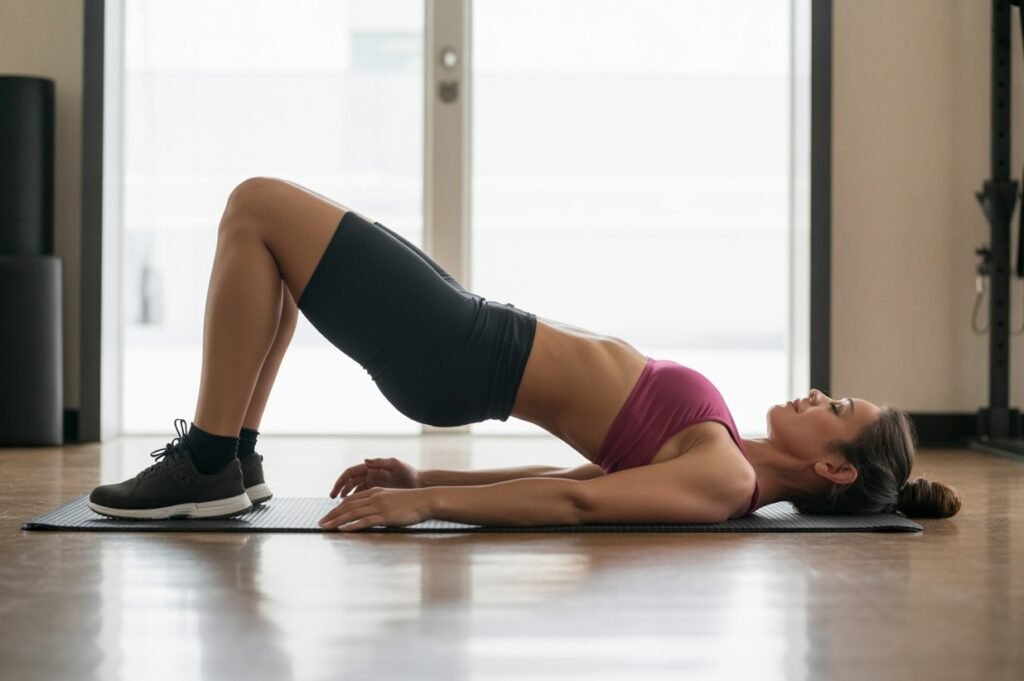
Though primarily a glute exercise, glute bridges heavily engage your core and lower back stabilizers. Lie on your back with knees bent and feet flat hip-width apart, then lift your hips toward the ceiling.
Squeeze your glutes at the top and lower with control. Perform 12-15 reps.
8. Modified Push-Ups
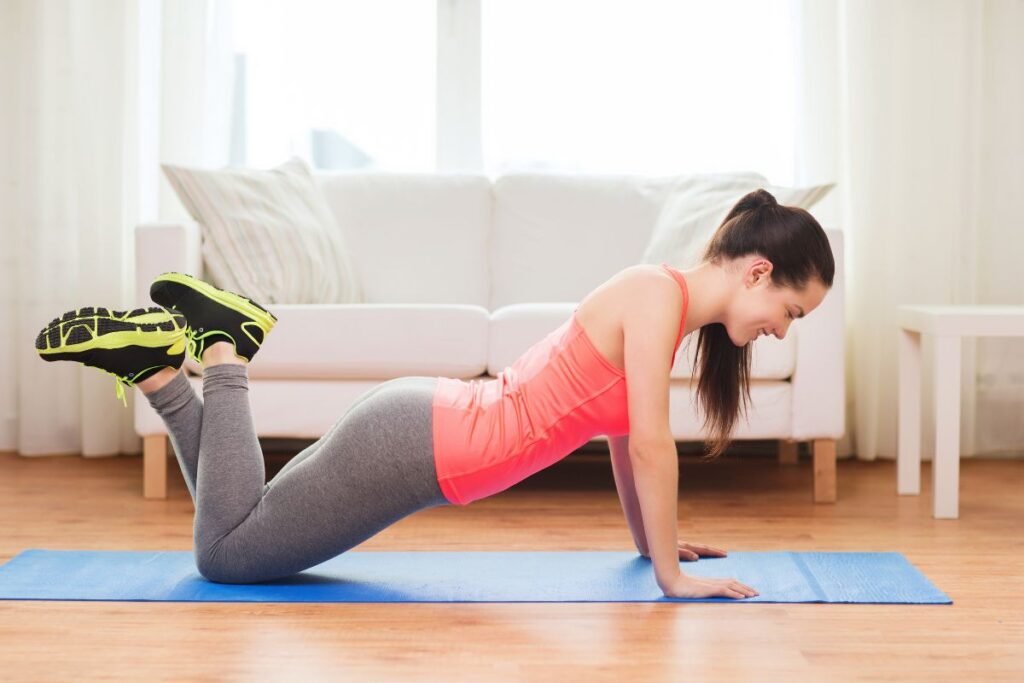
Modified push-ups build core endurance and upper body strength simultaneously. Start on your knees or against a wall, keeping your body in a straight line from head to knees.
Lower your chest toward the surface, maintaining core tension. Do 5-10 reps to start.
9. Plank (Against Wall or Incline)
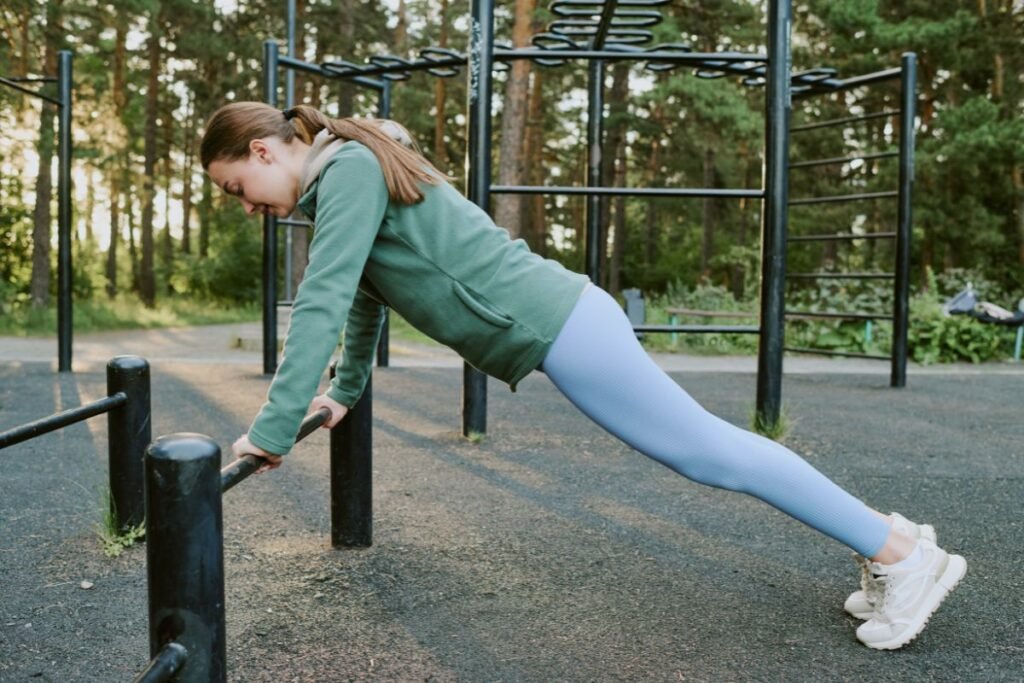
A wall plank is a beginner-friendly way to build core stamina without full bodyweight pressure. Place your hands on a wall or elevated surface and hold your body in a straight line.
Focus on breathing steadily and maintaining proper alignment. Hold for 15-20 seconds and rest, repeating 3-4 times.
10. Bird Dog
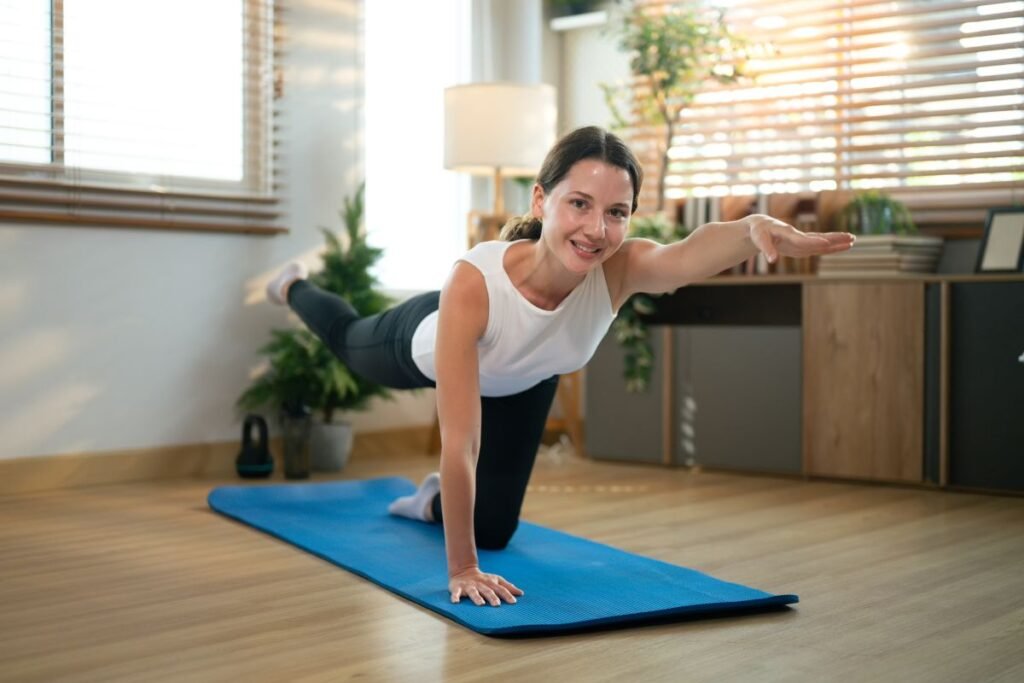
Bird dog improves balance, stability, and core strength while being low-impact. Start on your hands and knees, then extend your right arm forward and left leg back simultaneously.
Return to start and alternate sides. This exercise is excellent for lower back health. Do 8-10 reps per side.
11. Bicycle Crunches
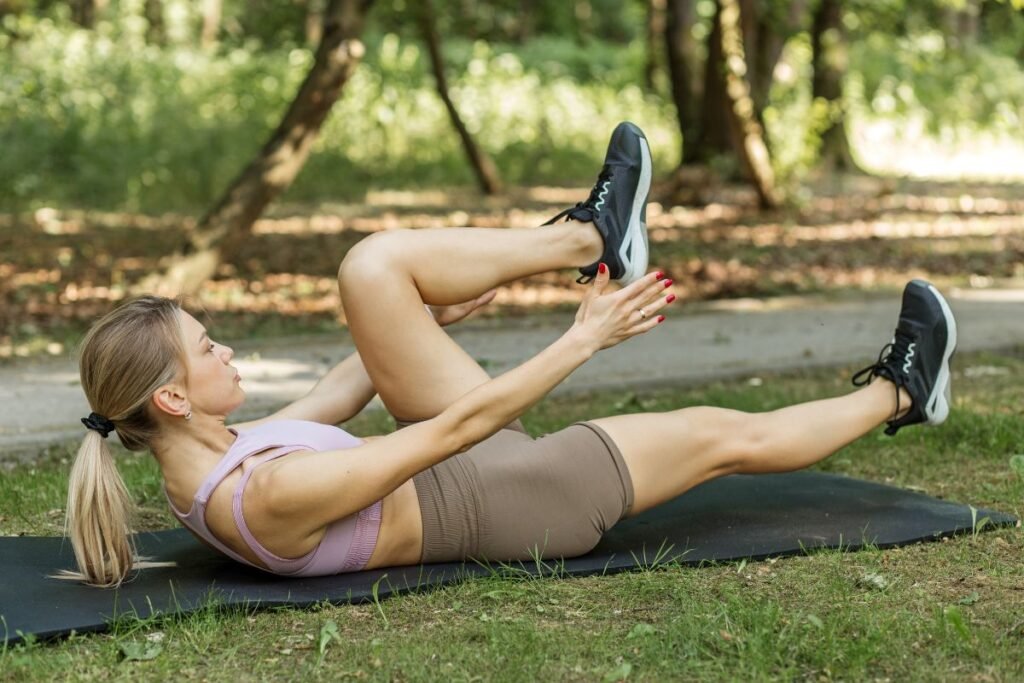
Bicycle crunches target both upper and lower abs while engaging obliques dynamically. Lie on your back with hands behind your head, then alternate bringing your opposite elbow toward your knee as you straighten the other leg.
Move at a controlled pace to avoid momentum taking over. Perform 15-20 total reps (8-10 per side).
12. Lying Knee Tucks
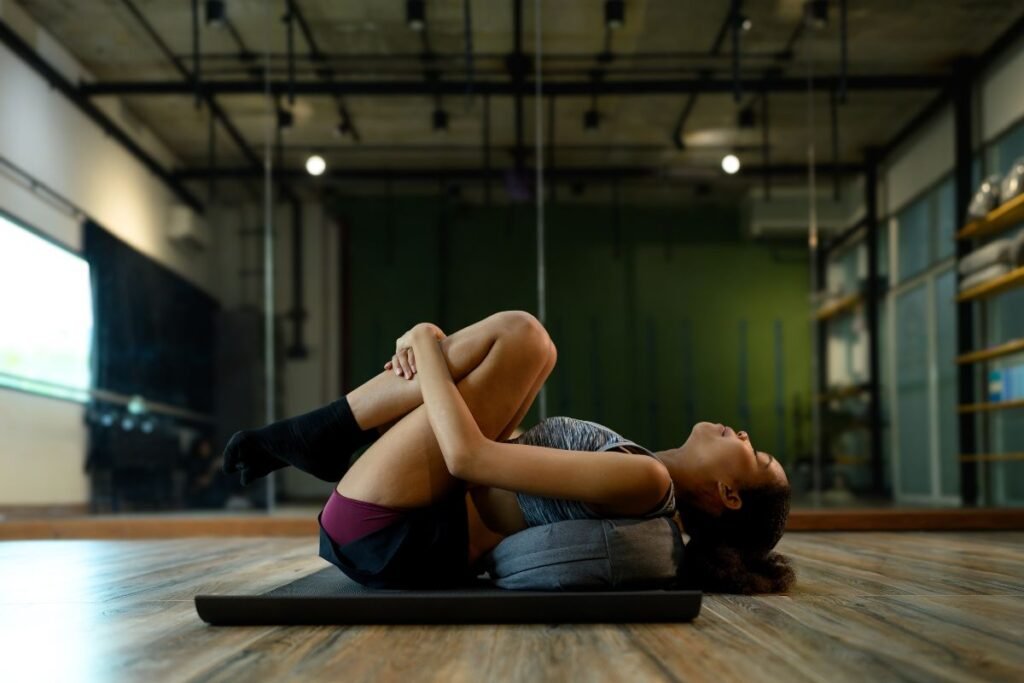
Knee tucks engage your lower abs and hip flexors with a rocking motion. Lie on your back with a slight recline, arms at your sides, then bring both knees toward your chest in a controlled movement.
Extend legs back without touching the floor. Complete 10-12 reps.
13. Scissor Kicks
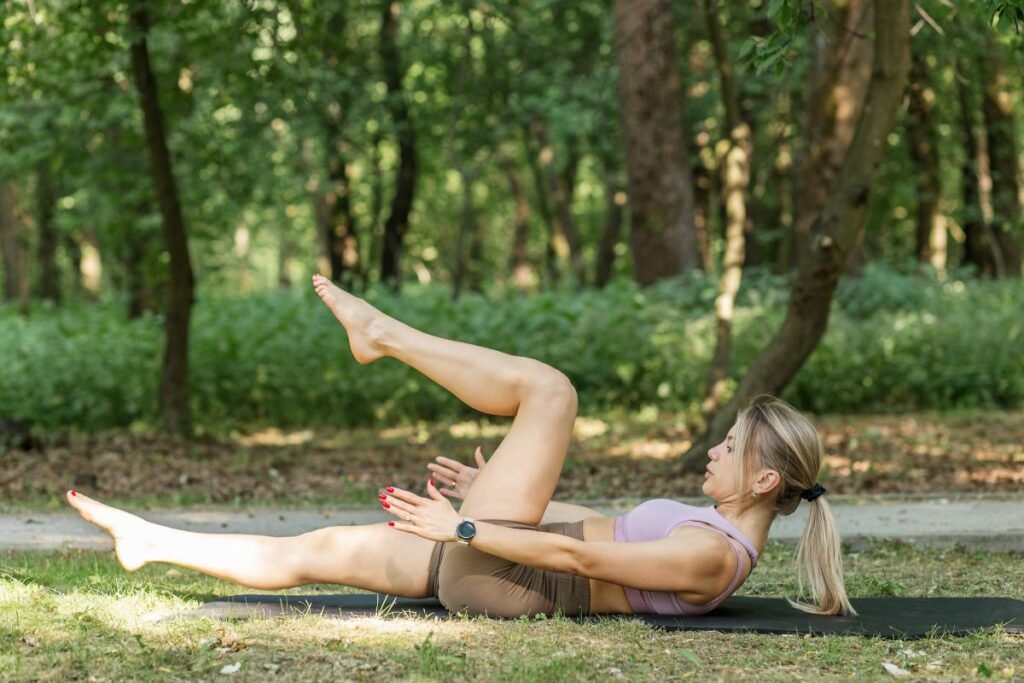
Scissor kicks build lower ab and hip flexor strength while improving leg control. Lie on your back with legs extended, then lift both legs slightly off the ground and cross one over the other in an alternating scissor motion.
Keep your lower back neutral by engaging your core. Do 15-20 total reps (8-10 per leg).
14. Hollow Body Hold
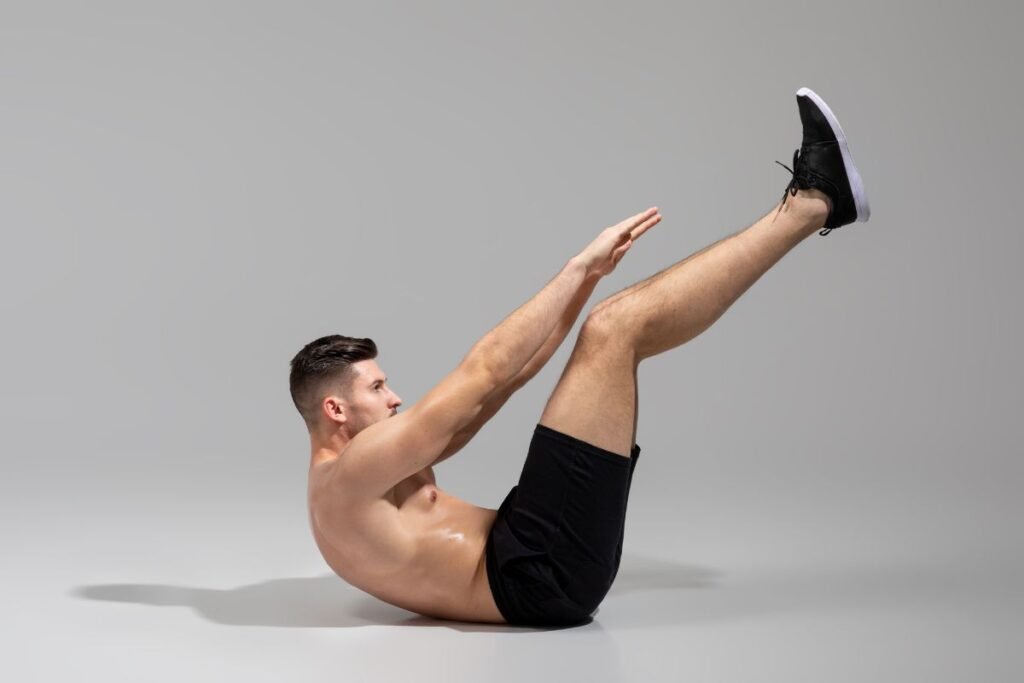
The hollow body position creates tension throughout your entire core and is a foundational gymnastics movement. Lie on your back, press your lower back to the floor, and extend your arms overhead while keeping your body in a slight curve.
This challenging position teaches proper core engagement. Hold for 10-15 seconds and repeat 3-4 times.
15. Tuck-Ups
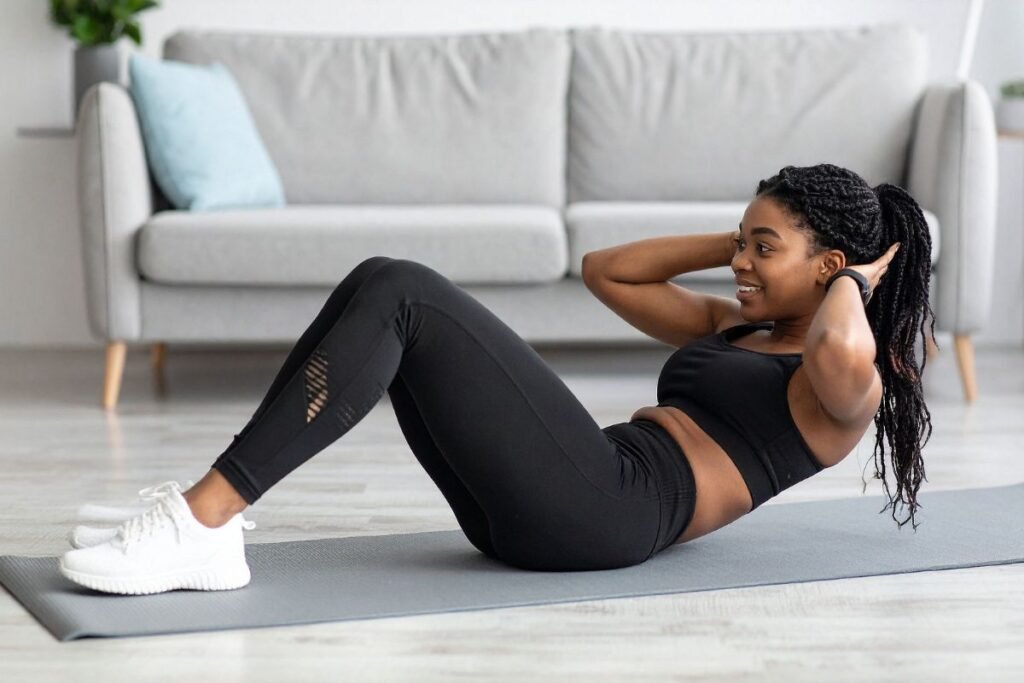
Tuck-ups combine the benefits of crunches and knee tucks for comprehensive lower ab work. Lie on your back with arms extended behind you, then simultaneously lift your upper body and bring your knees toward your chest.
Return to start with control. Perform 8-12 reps.
16. Toe Touches
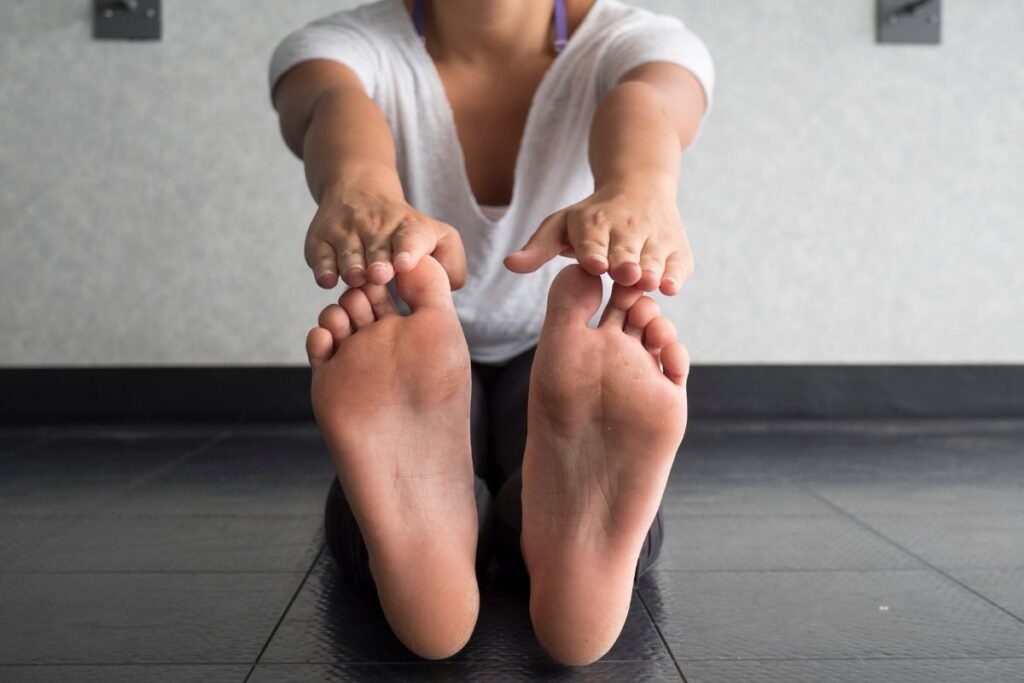
Toe touches target your upper abs and are easier on the neck than crunches for some people. Lie on your back with legs extended toward the ceiling, then crunch your torso and reach your hands toward your toes.
Lower with control but keep your legs engaged. Do 12-15 reps.
17. Single-Leg Glute Bridge
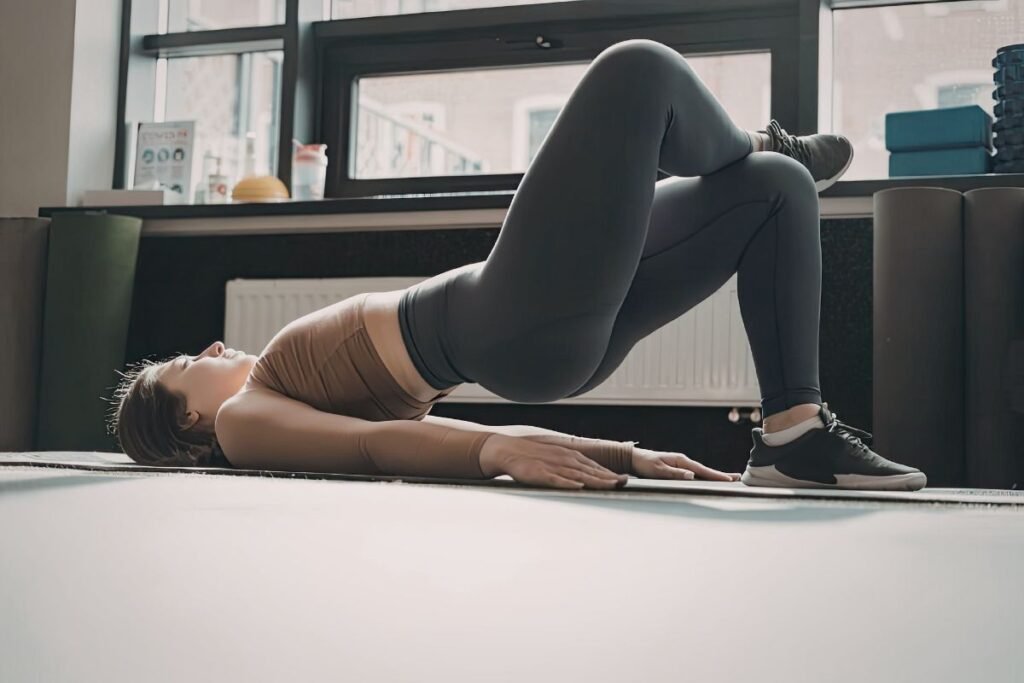
Single-leg glute bridges increase the challenge while maintaining core and glute activation. Lie on your back with one knee bent and one leg extended, then bridge by lifting your hips.
Keep your hips level and core braced. Complete 8-10 reps per leg.
18. Supine Pulse-Ups
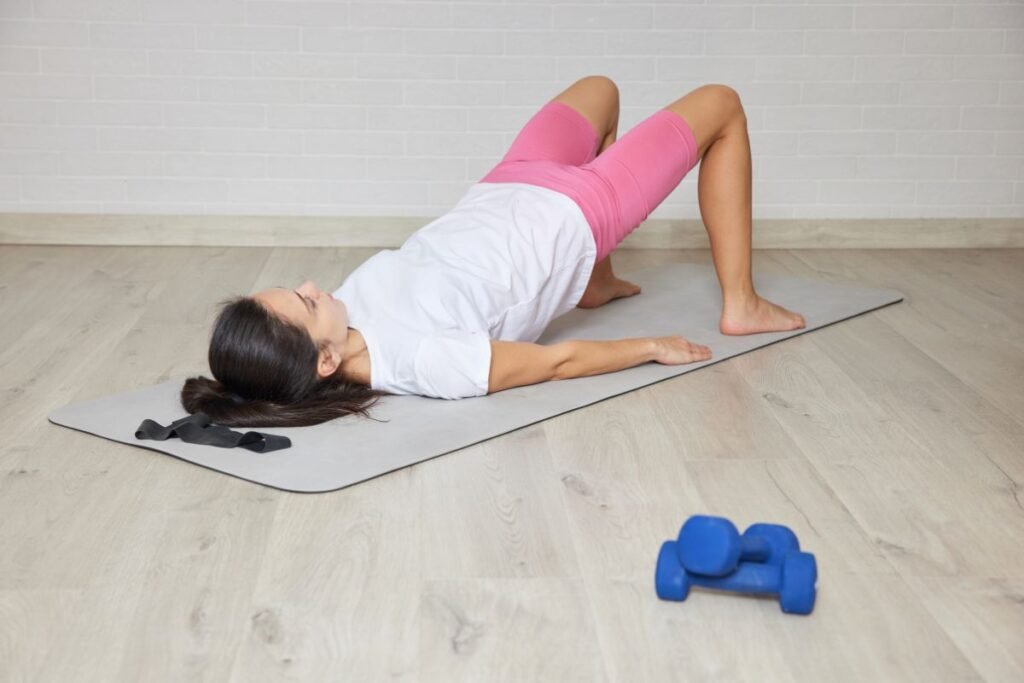
Supine pulse-ups isolate your lower abs through small, controlled movements. Sit with your torso reclined slightly, hands behind you for support, then pulse your legs upward.
Keep your legs relatively straight and maintain tension. Perform 15-20 pulses.
19. Mountain Climbers (Slow and Controlled)
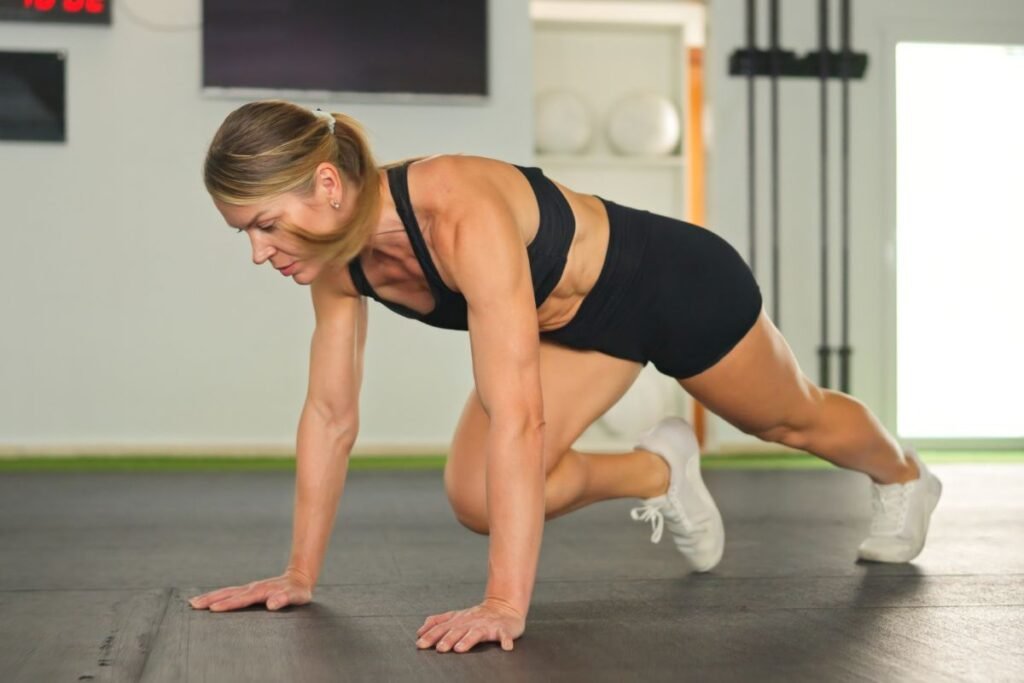
Slow mountain climbers build core endurance and controlled movement patterns. Start in a modified plank position on your knees or against a wall, then alternate bringing your knees toward your chest.
Move slowly and deliberately to feel the core engagement. Do 15-20 total reps (8-10 per leg).
20. Pallof Press (Bodyweight)
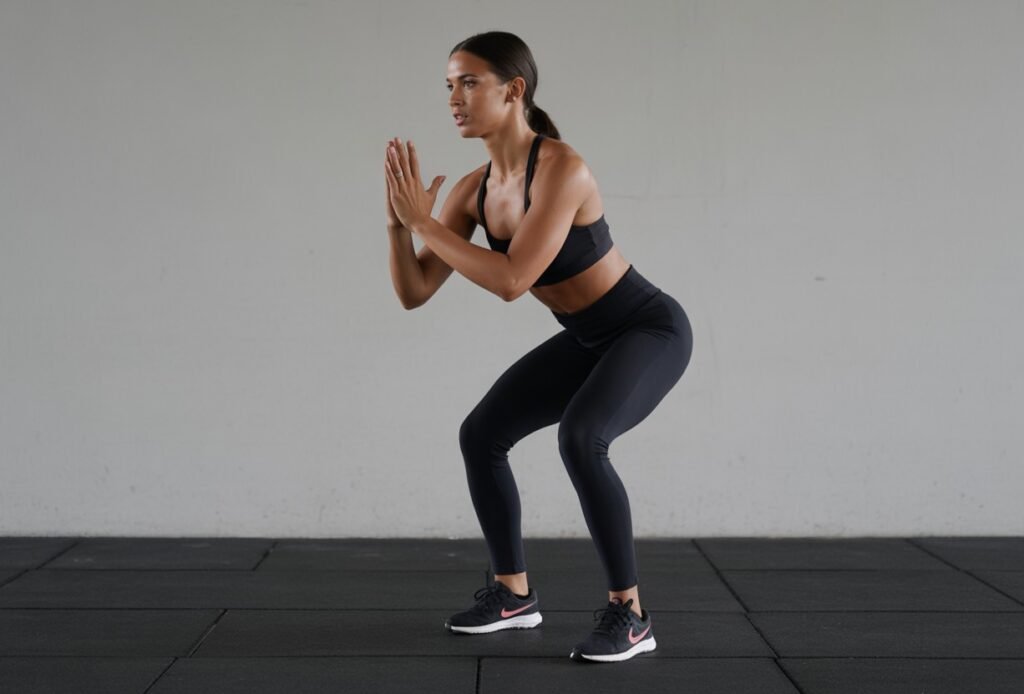
The Pallof press strengthens anti-rotation core strength, which is functional for daily life. Stand in a staggered stance and press your hands forward at chest height while resisting the urge to rotate.
This movement is excellent for overall core stability beyond just the abs. Perform 8-10 reps per side.
21. Lying Windshield Wipers
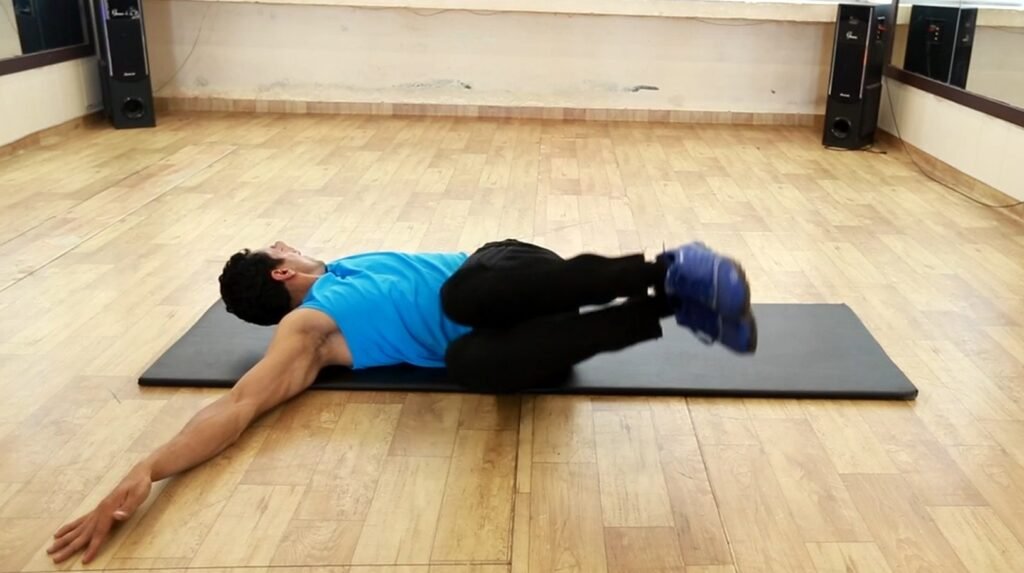
Windshield wipers challenge your obliques and lower abs through controlled rotation. Lie on your back with legs bent at 90 degrees, then slowly lower both knees to one side without letting them touch the floor.
Return to center and alternate sides. Perform 8-10 reps per side.
Getting Started: Sample Beginner Routine
This sample routine combines exercises to work your entire core. Perform this routine 3 times per week with at least one rest day in between.
Start with this foundation and gradually progress to more challenging variations as your strength improves.
Warm-Up (2-3 minutes)
- Marching in place
- Arm circles and gentle spinal twists
Main Workout
Perform each exercise for the recommended reps with 30-45 seconds rest between movements:
- Pelvic Tilts (15 reps)
- Glute Bridges (12 reps)
- Dead Bug (8 reps per side)
- Crunches (12 reps)
- Heel Touches (12 reps total)
- Plank Against Wall (20 seconds)
- Bird Dog (8 reps per side)
- Scissor Kicks (15 reps)
Cool-Down (2-3 minutes)
- Child’s pose
- Gentle spinal twists
- Deep breathing
Progression Tips for Increasing Difficulty
Once you can comfortably complete 15-20 reps or hold positions for 30+ seconds, it’s time to progress. Increase reps or time by 25-50%, move to a more challenging variation, or reduce rest time between exercises.
Listen to your body and progress gradually. Building core strength is a long-term journey, not a quick fix.
Common Mistakes to Avoid
Pulling on your neck during crunches is one of the most common errors that causes strain. Keep your hands lightly supporting your head without pulling, and lead with your chest instead.
Holding your breath is another mistake that reduces effectiveness and increases tension. Breathe steadily throughout each exercise: exhale during the exertion phase and inhale during the relaxation phase.
Not engaging your deep core is a subtle but important mistake. Before starting any exercise, draw your belly button toward your spine to activate your transverse abdominis, the deep stabilizer muscle.
Important Safety Considerations
If you have lower back pain, pelvic floor issues, or are postpartum, consult your healthcare provider before starting any new exercise routine. Some movements may need modification based on your individual situation.
Always prioritize form over speed or quantity. Proper form reduces injury risk and ensures you’re working the right muscles effectively.
When to See Results
Most people notice improved posture and better core engagement within 2-3 weeks of consistent training. Visible muscle definition typically takes 4-8 weeks of consistent exercise combined with proper nutrition.
Remember that core strength is more important than aesthetics. The benefits of improved posture, balance, and functional fitness will be noticeable much sooner than visual changes.
Conclusion
Building a strong core as a beginner doesn’t require complicated routines or expensive equipment. These 22 exercises provide a complete foundation for developing core strength, stability, and endurance from home.
Start with a few exercises, focus on proper form, and progress gradually. Consistency and patience will yield better results than intensity and speed. You’ve got this!